

 Nikhil Solanki
Project Management in Tech: How Agile, Scrum, and Digital Tools Are Redefining How Teams Work
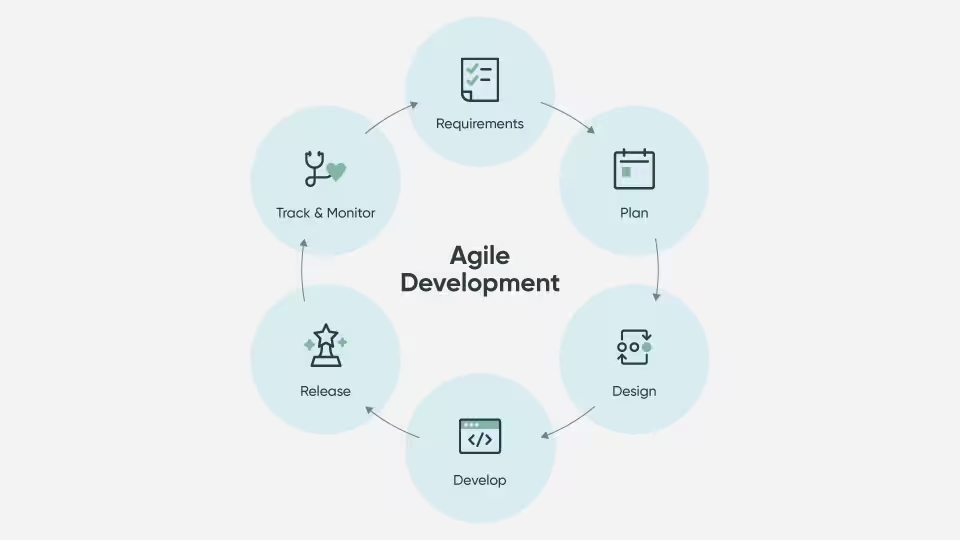
Software projects have a well-documented history of running over budget, missing deadlines, and delivering products that don’t match what users actually need. The root cause is rarely technical — it’s organizational. Poor planning, unclear requirements, miscommunication between stakeholders, and rigid processes that can’t adapt to change are the real culprits behind most failed software projects. Modern project management methodologies, particularly Agile and Scrum, exist specifically to address these challenges — and in 2025, they have become the dominant operating model for technology teams worldwide.
Why Traditional Project Management Falls Short in Tech
Waterfall project management — where requirements are defined upfront, development proceeds in sequential phases, and the product is delivered at the end — made sense for physical engineering projects where changing course midway through was genuinely costly. Software is different. Requirements change as users interact with early versions. Market conditions shift during long development cycles. Technical constraints discovered during implementation require design adjustments.
Attempting to manage software development like construction almost always results in a product that was perfectly specified for conditions that no longer exist by the time it ships. The industry learned this lesson expensively over decades, and Agile emerged as the structured response — a framework built around embracing change rather than resisting it.
Scrum: Structure Within Agility
Scrum is the most widely adopted Agile framework in software development. It organizes work into short, fixed-length cycles called sprints — typically two weeks — during which a cross-functional team commits to delivering a defined set of working functionality. Daily stand-ups keep the team aligned. Sprint reviews gather stakeholder feedback on completed work. Retrospectives help teams continuously improve their process.
The Scrum framework’s roles — Product Owner, Scrum Master, and Development Team — distribute responsibility deliberately. The Product Owner prioritizes the backlog based on business value. The Scrum Master facilitates the process and removes blockers. The Development Team owns how the work gets done. This separation prevents the micromanagement that kills developer productivity while maintaining clear accountability for outcomes.
For technology professionals who want to formalize their understanding of web-based project environments and the digital infrastructure that modern project management relies on, building foundational web knowledge is increasingly valuable. The web application fundamentals series part three provides the technical context that helps project managers and technical leads communicate more effectively with engineering teams — a skill that consistently improves project outcomes.
Digital Tools Transforming Project Delivery
Modern project management is inseparable from the digital tools that enable it. Platforms like Jira, Asana, Linear, and Notion have replaced physical Kanban boards and spreadsheet-based tracking with real-time collaborative environments that give entire organizations visibility into project status, bottlenecks, and team capacity.
These tools generate data that enables evidence-based project decisions. Velocity tracking shows how much work a team reliably completes per sprint. Burndown charts visualize progress toward sprint goals in real time. Cycle time metrics reveal where work gets stuck in review or approval queues. Teams that use this data systematically make dramatically better planning decisions than those relying on intuition and optimism alone.
Remote and distributed team management has also accelerated tool adoption. When team members work across time zones, asynchronous communication through documented project management platforms becomes essential — not just convenient. The shift to distributed work has made digital project management literacy a requirement for every team member, not just designated project managers.
Building a Career in Technical Project Management
Technical project managers — those who combine project management expertise with genuine understanding of software development — are among the most valuable and well-compensated professionals in the tech industry. They bridge the gap between business stakeholders who define what needs to be built and engineering teams who determine how to build it. Without this bridge, projects drift, priorities conflict, and technical debt accumulates silently until it becomes a crisis.
Students often do internships to grow at a fast pace within product and engineering teams, observing firsthand how sprint planning, backlog refinement, and stakeholder communication work in practice. These experiences build the situational judgment that no textbook can fully convey — understanding when to escalate a risk, when to push back on an unrealistic deadline, and when to protect the team from scope creep disguised as a small request.
For learners who want to explore the full ecosystem of technology courses that support both technical and project management career paths, EasyShiksha’s complete course catalog offers structured learning across disciplines — from software development and database management to digital communication and professional skills that tech teams rely on every day.