

 Nikhil Solanki
Full Stack Web Development: The Skills, the Stack, and the Career Path
The term “full stack developer” has been both celebrated and criticized since it entered the tech lexicon. Critics argue it sets unrealistic expectations — no single person can be equally expert in every layer of a web application. Proponents counter that breadth of knowledge, even without depth in every area, makes developers dramatically more effective in collaborative environments. In 2025, the reality is pragmatic: full stack skills are genuinely in demand, particularly at startups and mid-sized companies where versatile engineers who can own features end-to-end deliver outsized value.
What Full Stack Actually Means Today
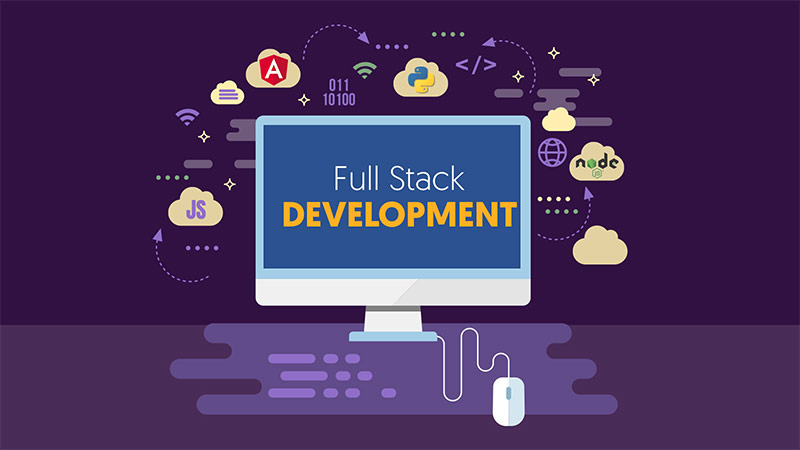
A full stack developer is someone who can build both the client-facing side of a web application (frontend) and the server-side logic and data management (backend). In practice, this means being comfortable with HTML, CSS, and JavaScript on the frontend — including at least one modern framework like React, Vue, or Angular — while also being capable of building APIs, managing databases, handling authentication, and deploying applications to cloud infrastructure on the backend.
The frontend landscape has matured significantly. Component-based architecture, state management, responsive design, accessibility standards, and performance optimization are all expected competencies for frontend work at a professional level. The days of slapping together HTML tables and inline styles are long gone — modern frontend development is genuinely complex engineering.
On the backend, language choice varies widely by organization and use case. Node.js, Python (Django/Flask), Ruby on Rails, PHP (Laravel), and Java (Spring) are all actively used in production systems. What matters more than language choice is understanding the patterns — RESTful API design, middleware architecture, database connection pooling, error handling, and security best practices — that apply across stacks.
For learners building frontend foundations, understanding HTML, CSS, and responsive frameworks is the essential first step. This web designing course covering HTML, CSS, and Twitter Bootstrap provides exactly this foundation — the visual and structural building blocks that every frontend developer builds on regardless of which JavaScript framework they later specialize in.
Backend Development and Database Integration
Backend development without database knowledge is incomplete. Every meaningful web application persists data — user accounts, content, transactions, preferences — and the quality of the database layer determines application performance, data integrity, and scalability at every stage of growth.
PHP combined with MySQL remains one of the most deployed backend stacks in the world, particularly in content management systems, e-commerce platforms, and small-to-medium business applications. Understanding how server-side scripting interacts with relational databases — passing queries, handling results, managing connections — is fundamental backend knowledge that transfers across stacks. Developers who want to build this backend competency practically can explore this web development course covering PHP and MySQL database integration, which covers the server-side fundamentals that power a significant portion of the live web.
Deployment, DevOps Basics, and the Modern Developer Workflow
Full stack developers in 2025 are expected to understand at least the basics of deployment and DevOps. This means familiarity with version control (Git), basic CI/CD pipeline concepts, containerization (Docker), and cloud hosting platforms. Developers who can take their application from local development through testing and into a cloud-hosted production environment without requiring dedicated DevOps support are significantly more autonomous — and more valuable — than those who hand off at the code review stage.
Security awareness is another non-negotiable component of full stack development. Understanding common vulnerabilities — SQL injection, cross-site scripting (XSS), cross-site request forgery (CSRF), insecure authentication — and knowing how to defend against them is expected knowledge at every level of web development, not just for security specialists.
Launching Your Full Stack Career
Students often do internships to grow at a fast pace inside product engineering teams, where they experience the full development lifecycle — from picking up a ticket in a sprint to shipping code that real users interact with. These experiences accelerate full stack competency faster than any isolated course or personal project because they expose developers to real codebases, real constraints, and real feedback loops.
For learners mapping out a structured path from web fundamentals to full stack proficiency, EasyShiksha’s web application fundamentals series provides a progressive curriculum that builds knowledge layer by layer — giving developers the conceptual depth that separates those who can follow tutorials from those who can architect and build original systems independently.
Share Post
Related reading
 Digital Transformation for Small Businesses: Why Your Website Is Just the Beginning
Digital Transformation for Small Businesses: Why Your Website Is Just the Beginning Digital transformation...